|
|
|
|
|
|
|
|
|
|
|
|
|
 |
 |
 |
 |
 |
 |
 |
 |
|
||||
 |
 |
 |
 |
 |
 |
|
||||||
|
|||||||||||||||||||||||||||||||||||||||
| ◄ | |||||||||||||||||||||||||||||||||||||||
Classic Cases |
 |
* Translation by Serge Roube
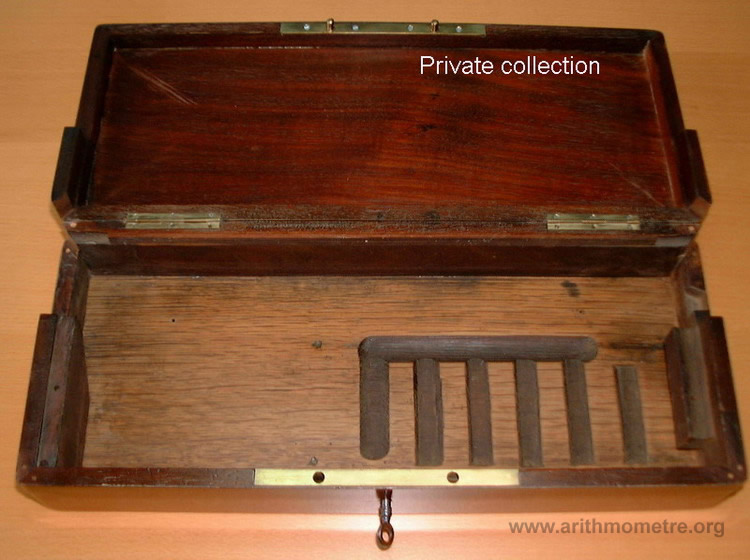
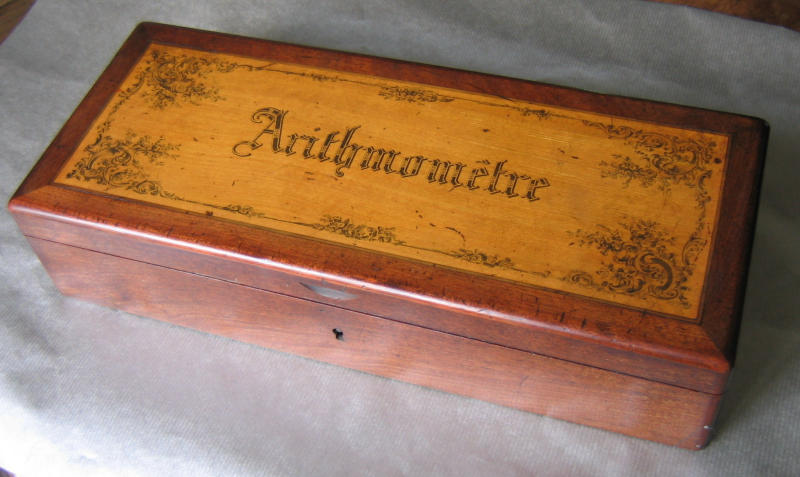
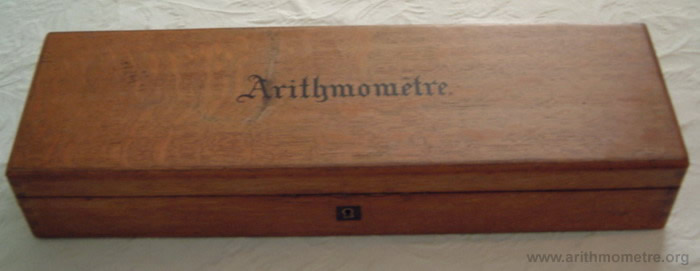
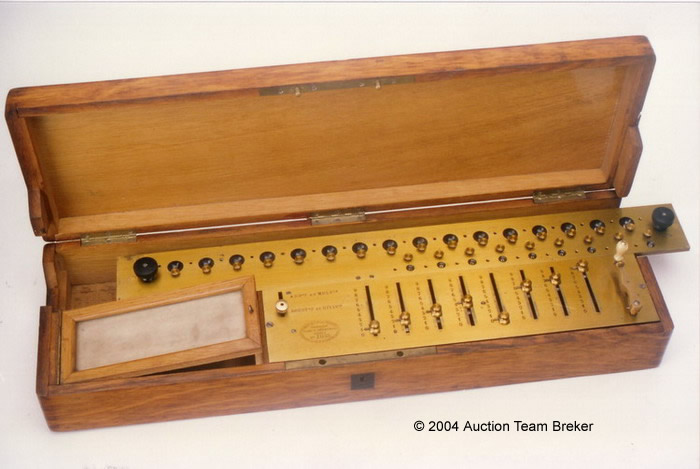
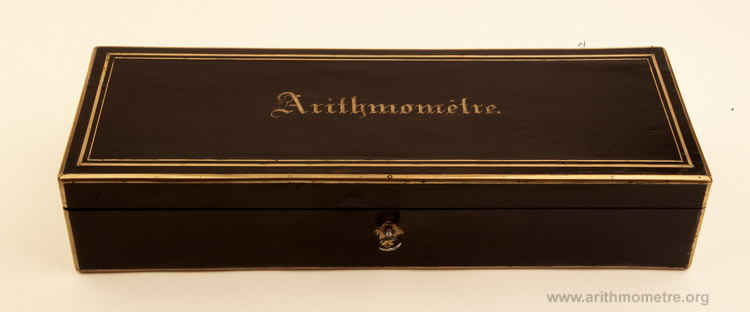
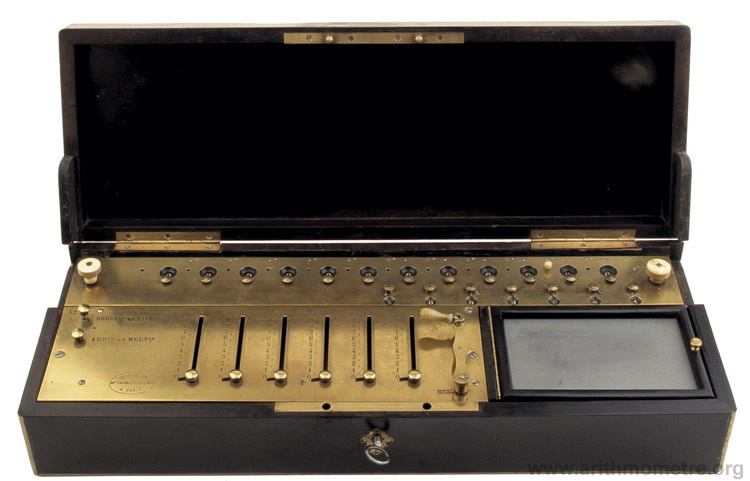
There is a great variety of cases spanning from the rarest woods to more classical ones. While Thomas de Colmar was alive, until 1870, the cases were mostly made of Ebony and/or Ebony veneer. Delicately inlaid with threads of brass, they have “Aritmometre” written on the lid. Inside, a holding area allows you to store a stylus, some pegs to indicate the decimal places, a bit of paper...
After 1870, the Black Cases are mostly found with 20 digit machines. We have one example of a Payen Arithmometer with a black case, which makes it quite scarce. Additionally, they no longer have the same quality of manufacturing and a black lacquer replaces the beautiful ebony inlay!
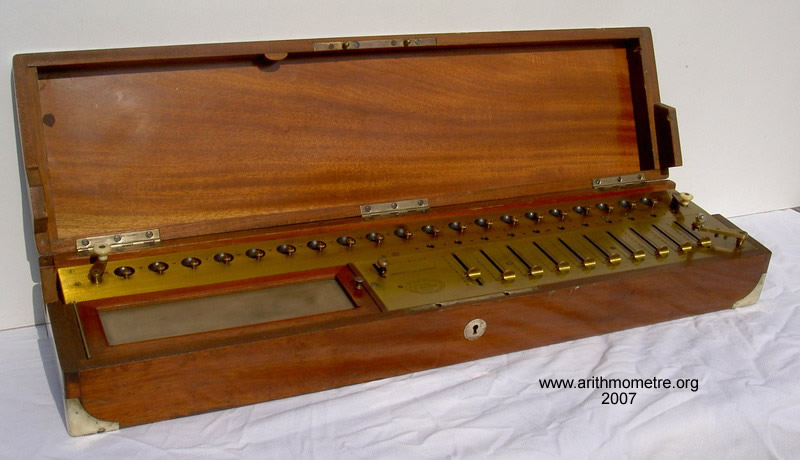
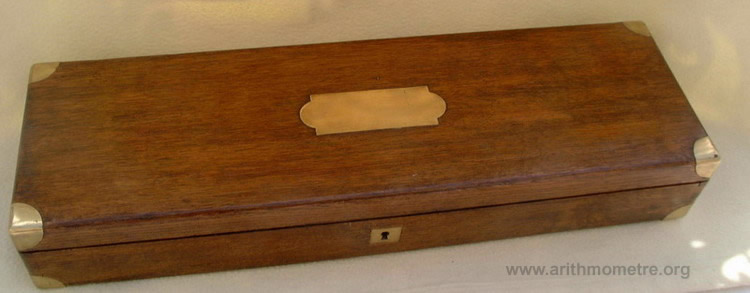
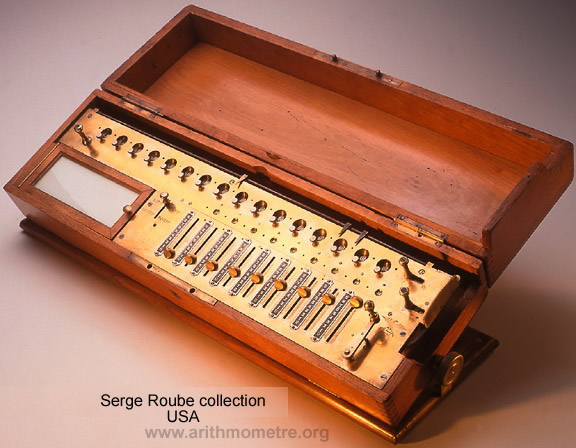
B) Mahogany Mahogany first appear on a prototype of 1850. The case is made of a beautiful blond mahogany! One distinctive feature is the grooves carved in the wood to allow the cylinders to rotate! The cabinet-maker must have messed up the dimensions!
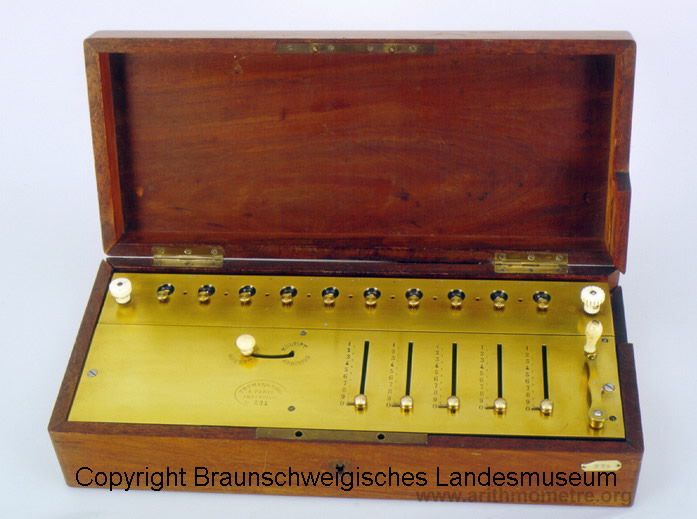
C) Oak Oak was one of the favorite woods used on the last Thomas and was used almost exclusively for the Payen production. These cases were solid and cheaper to manufacture!
|
www.arithmometre.org
2013
/ComparaisonBoite.jpg)